
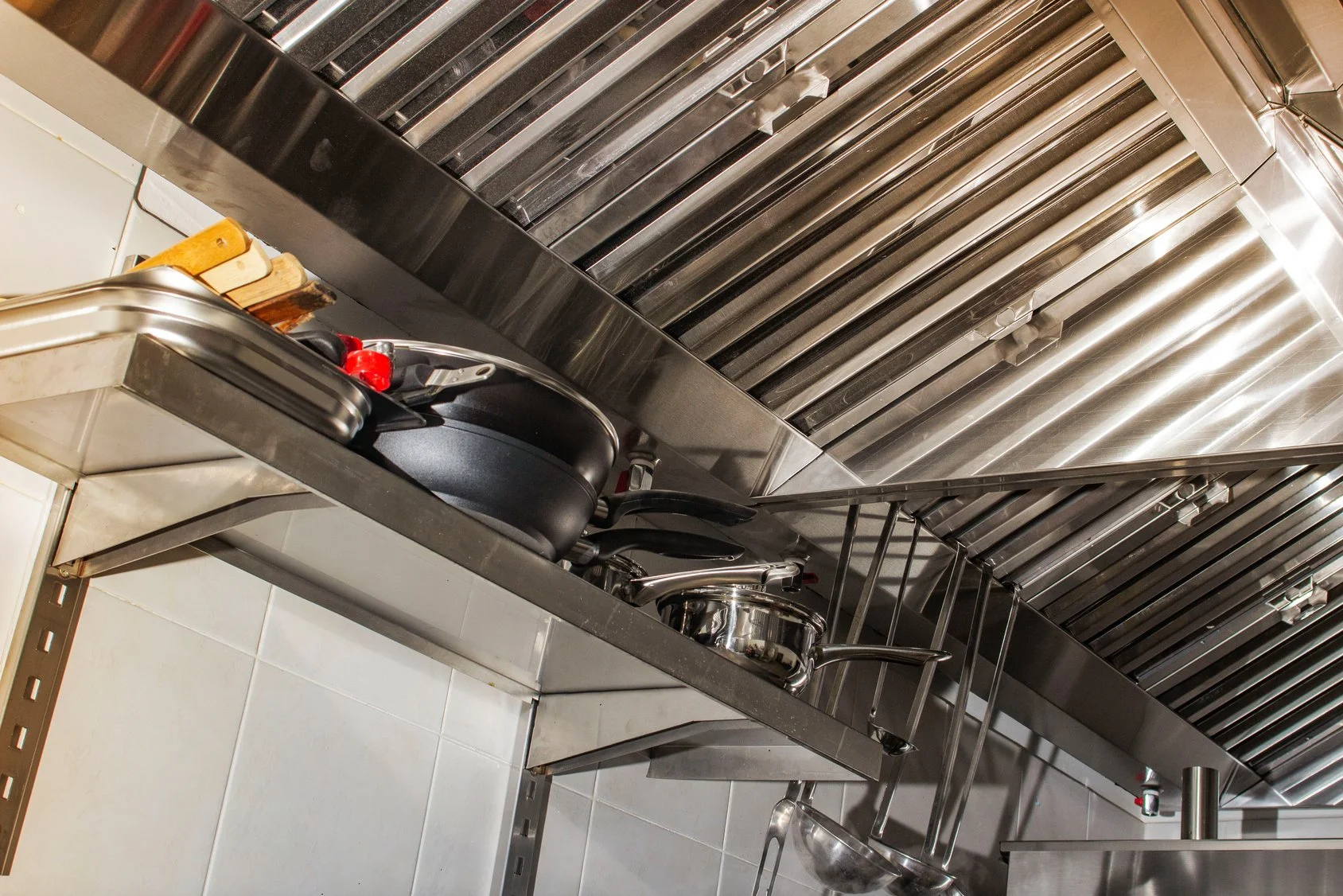
Our restaurant clients are heading into the busiest stretch of the year, with holiday parties, catering orders, and fryers that rarely get a break. That makes it a good time to look at the system that protects the cooking line. Below, we’ve shared an overview of the UL 300 standard for kitchen fire suppression systems, why it matters for today’s equipment, and what to do if a fire starts. In over a century, we’ve seen how preparation protects both people and businesses.
Americans continue to dine out at high rates; because of this, commercial cooking equipment needs to be as fast and efficient as ever. Today’s commercial cooking equipment (e.g., deep fryers, griddles, ranges and woks) heats faster and cools slower, increasing the chances of a fire, which could be disastrous for your restaurant.
That’s why it’s important that your equipment complies with the Underwriters Laboratories (UL) 300 test standard for pre-engineered chemical fire suppression systems. If your equipment was manufactured after November 1994, it must comply with the UL 300 standard.
UL 300 Background
Pre-engineered chemical suppression systems were first developed in the 1960s as a way to decrease restaurant fires. Suppression systems of the time used dry chemicals for suppression, but as restaurants began to use vegetable oil instead of lard to fry food, this method became more and more ineffective.
The change from lard to vegetable oil was significant—vegetable oil burns at a higher temperature—about 100 degrees more than lard—and therefore increases the potential for fires in restaurants.
UL 300 systems use a wet chemical system, which provides better flame knockdown and quicker fire suppression for today’s high-efficiency fryers. Systems using dry chemicals have never been UL 300 compliant.
Why You Need UL 300-Compliant Equipment
According to the United States Fire Administration (USFA), restaurant building fires occur thousands of times each year, causing injuries and hundreds of millions of dollars in property loss.
UL 300 systems can significantly reduce the probability of a fire spreading in your restaurant, which can cost you thousands of dollars in equipment damage, fire cleanup and cessation of business activities for weeks or even months.
Compliance
Most states now mandate that newly-built restaurants contain a fire extinguishing system that is UL 300 listed, while many states further require that presently installed, pre-UL 300 restaurant systems be upgraded or retrofitted.
In addition, some states will tag a non-compliant system with a yellow or red violation, and can issue fines until the restaurant becomes compliant.
Fighting a Fire
If you are ever in a situation where there is a fire in your restaurant, the manual-pull activation for a UL 300 fire suppression system should be used as the first response to a fire because it shuts off the power or gas to the cooking equipment.
Class K portable fire extinguishers should also be stored in the restaurant as a secondary tool for fire suppression. Make sure all your employees are trained on how to use portable fire extinguishers.
We Can Help
To protect your business, you must have commercial cooking equipment that complies with the UL 300 testing standard. Contact JH Berry Risk Services today for more information about UL 300 fire suppression systems.
Want to talk through how your restaurant’s coverage fits the way your kitchen actually runs? Explore our restaurant and hospitality insurance services or reach out to our team. No pressure, just a conversation about what makes sense for your business.
This Risk Insights is not intended to be exhaustive nor should any discussion or opinions be construed as legal advice. Readers should contact legal counsel or an insurance professional for appropriate advice. © 2023 Zywave, Inc. All rights reserved.